
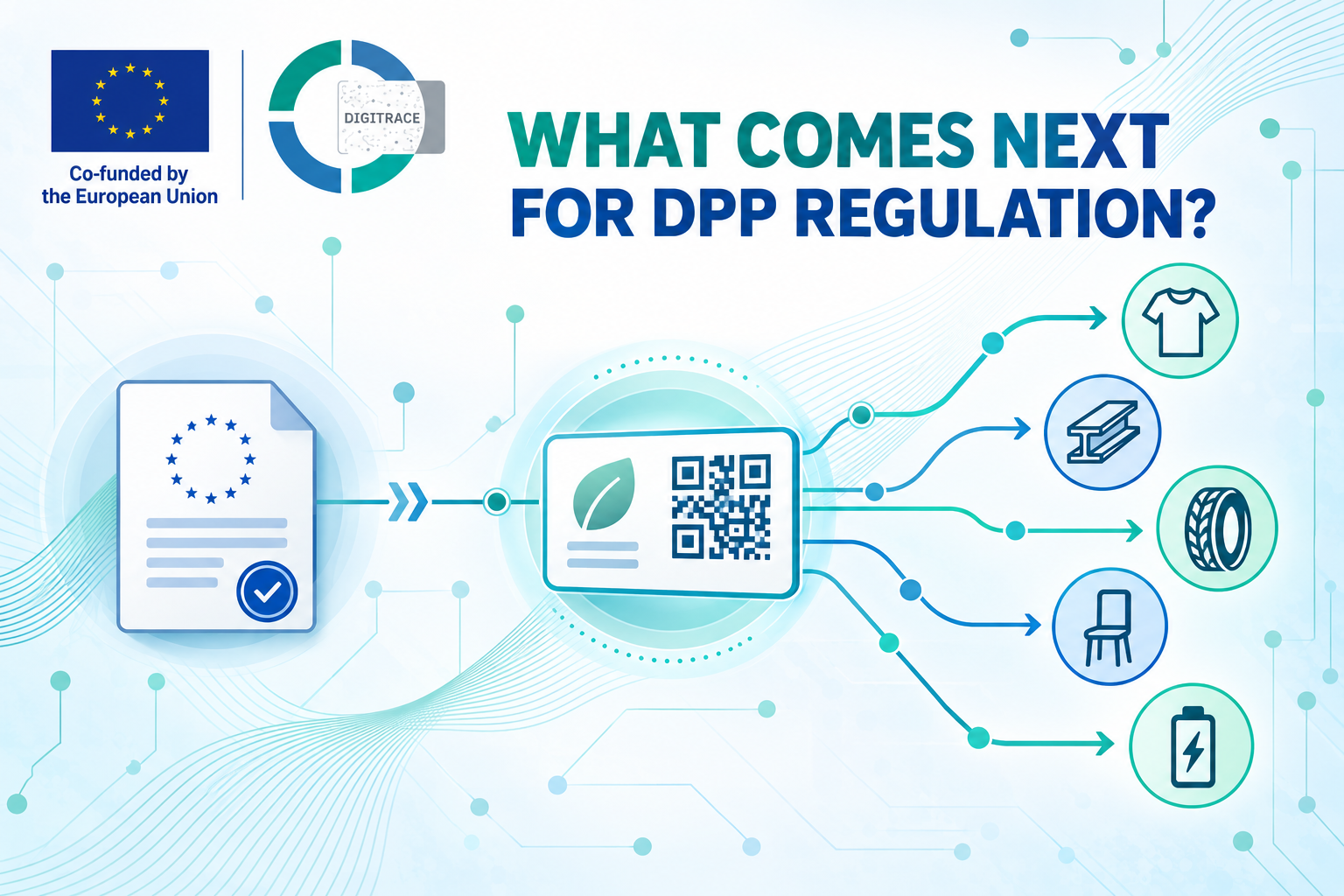
With the Digital Product Passport Registry now operational, attention is increasingly shifting from the overall DPP framework towards the next phase: translating the European rules into concrete requirements for individual product groups.
The Digital Product Passport will not be introduced for every product at the same time or with identical requirements. Instead, implementation will take place progressively through product-specific legislation under the Ecodesign for Sustainable Products Regulation (ESPR) and through other EU legislation requiring a DPP.
For businesses, this means that the coming years will bring much greater clarity about which products require a DPP, what information it must contain, who is responsible for providing and updating that information, and when the requirements become applicable.
From a common framework to sector-specific rules
The ESPR establishes the overall framework for introdu
cing ecodesign requirements and Digital Product Passports. However, many of the detailed obligations businesses will ultimately need to follow are being developed through product-specific delegated acts.
These acts will define requirements according to the characteristics and sustainability priorities of individual product groups. This is important because the information relevant to a textile product, for example, will not necessarily be the same as the information required for a steel product, tyre or piece of furniture.
The European Commission's Ecodesign for Sustainable Products and Energy Labelling Working Plan 2025–2030 identifies several priority product groups, including:
iron and steel;
aluminium;
textiles and apparel;
furniture;
tyres;
mattresses.
The Working Plan also includes horizontal measures addressing areas such as product repairability and recycled content in electrical and electronic equipment.
The next milestones
According to the European Commission's current indicative DPP timeline, several important regulatory developments are expected over the coming years.
Iron and steel are among the first ESPR product groups to move forward. The relevant delegated act setting sector-specific requirements is currently indicated for Q4 2026.
The first mandatory DPP deadline under existing sectoral legislation will follow shortly afterwards. From 18 February 2027, Digital Product Passports will become mandatory for certain batteries, including electric vehicle batteries, light means of transport batteries and industrial batteries covered by the relevant requirements.
Further developments are expected during 2027. The Commission currently indicates DPP-related measures for construction products and DPP service providers, followed by product-specific delegated acts for textiles, aluminium and tyres during the second half of the year.
Furniture is currently expected to follow in 2028, while work on mattresses and additional horizontal requirements is expected to continue into 2029.
These dates form part of an indicative implementation timeline and may evolve as legislative and technical work progresses.
Textiles: a sector to watch closely
Textiles are particularly relevant to DIGITRACE because they are one of the project's five target sectors and one of the priority product groups identified under the ESPR Working Plan.
The Commission currently plans the adoption of the ESPR delegated act for textiles in Q4 2027. The act is expected to establish both ecodesign and textile-specific DPP requirements.
This will translate the general DPP framework into much more concrete obligations for businesses operating in textile value chains. Additional guidance, technical specifications and implementation measures are expected to support companies following adoption.
The sector therefore provides a good example of how DPP regulation is evolving: from broad European principles towards specific data and sustainability requirements that businesses will need to integrate into everyday operations.
What should SMEs do now?
For many SMEs, the fact that product-specific requirements are still being developed may create the impression that there is plenty of time to prepare. In practice, waiting for every detail to be finalised could make the transition significantly more difficult.
Following the adoption of ESPR delegated acts, economic operators will generally have a transition period of at least 18 months before the relevant requirements apply.
However, DPP readiness is not simply a matter of creating a digital record at the end of that period. Businesses may need time to understand what data they already have, identify information gaps, engage suppliers, improve internal data management and adapt digital systems.
Some useful steps can therefore begin before all sector-specific rules are finalised:
Map existing product data and understand where it is stored and who is responsible for it.
Identify data gaps, particularly where information depends on suppliers or other value-chain partners.
Follow sector-specific regulatory developments rather than relying only on the general ESPR framework.
Review traceability and data-management processes to understand whether product information can be reliably collected, updated and exchanged.
Build internal DPP knowledge and skills among the employees who will be involved in compliance, sustainability, procurement, production and data management.
A moving regulatory landscape
The next phase of DPP implementation will therefore be characterised by progressive sector-by-sector regulation.
At the same time, the technical foundations are continuing to develop. European standards are supporting interoperability across the DPP system, while further measures will address areas such as DPP service providers, access rights and the interaction of DPP information with public authorities.
The ESPR Working Plan itself is scheduled for a mid-term review in 2028, meaning that priorities may continue to evolve as implementation progresses.
For SMEs, the key message is therefore not to wait for a single "DPP deadline". There will be different timelines and requirements depending on the product and sector. Understanding where a company sits within this evolving landscape will be an important part of preparing effectively.
What does this mean for DIGITRACE?
This progressive regulatory rollout highlights why sector-specific and role-specific preparation is central to the DIGITRACE approach.
Different SMEs will face different challenges depending not only on their sector, but also on their position in the value chain and their role in collecting, managing, providing or using product information.
DIGITRACE aims to help bridge the gap between emerging DPP requirements and the practical capabilities SMEs will need to respond to them. By developing targeted learning resources, practical tools and sector-relevant guidance, the project supports businesses in building their DPP readiness before requirements become mandatory.
As the regulatory framework continues to take shape, DIGITRACE will follow these developments and translate them into practical knowledge for SMEs across its target sectors.